The Source of Immortality
Alajos Strobl (1856–1926)
The Source of Immortality
Alajos Strobl (1856–1926)
Exhibition at the Hungarian University of Fine Arts
This year, the Hungarian University of Fine Arts commemorates its legendary former professor, Alajos Strobl, on the 170th anniversary of his birth and the 100th anniversary of his death. Strobl was not only one of the most influential sculptors of his time, whose name is associated with works such as the equestrian statue of St Stephen in Buda Castle, the Matthias Fountain, and the János Arany Monument in front of the Hungarian National Museum, but he also played a prominent role in Hungarian art education at the turn of the twentieth century. From 1885 onwards, he taught sculpture students at the Model Drawing School, the predecessor of the Hungarian University of Fine Arts, and later became Director of the Master School of Sculpture. He taught for four decades in Epreskert, where he also maintained his own studio.
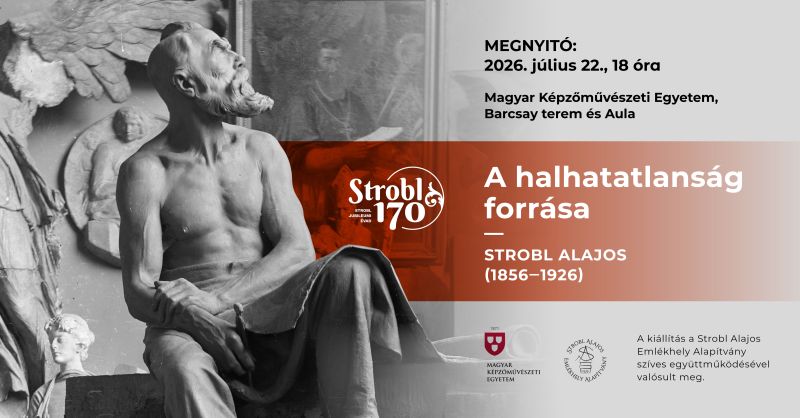
Opening: 22 July 2026, 6:00 pm
The exhibition will be opened by art historian Dr Márk Szerdahelyi.
Admission is free from 22 July to 19 September.
Opening hours: Tuesday to Saturday, 10.00 am–6.00 pm.
Curators: Apolka Erős and Dániel Borovi
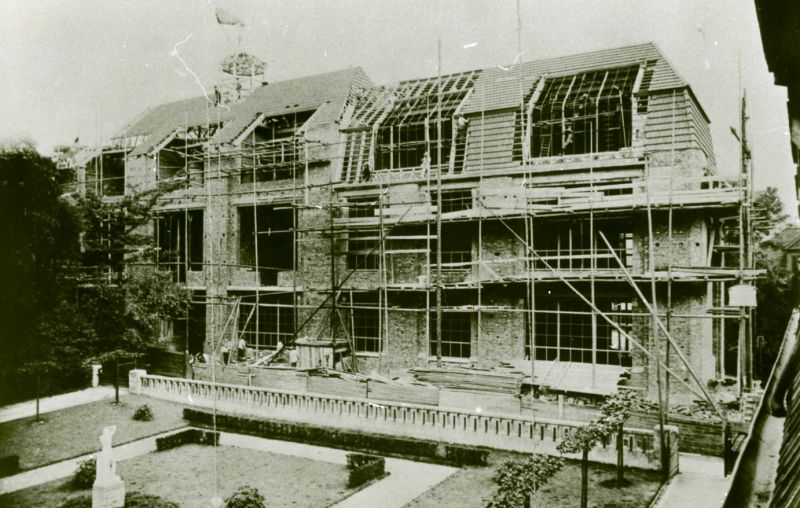
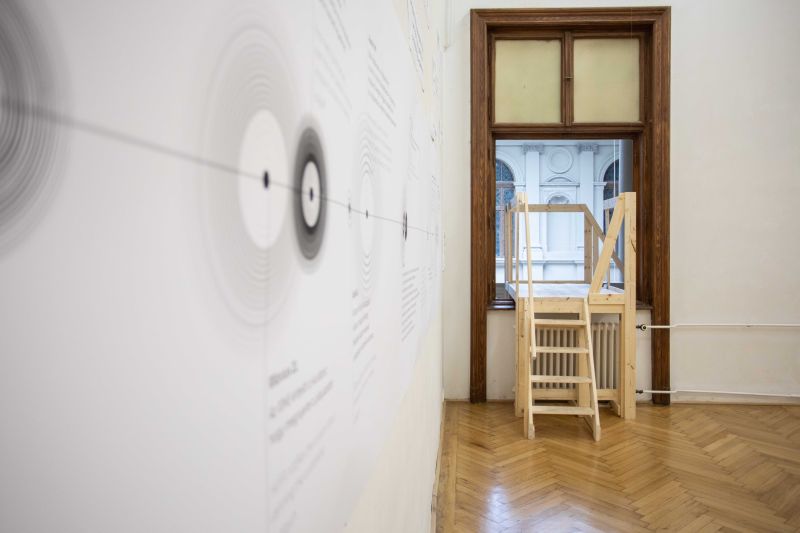
Our exhibition, titled The Source of Immortality, takes its name from an installation designed by Strobl for the 1897 Artists' Evening at the Art Gallery. It presents the sculptor's work in a setting to which he was closely connected, both as an artist and as an educator. The exhibition is held in the main building of the Hungarian University of Fine Arts on Andrássy Avenue, which originally opened in 1877 as the Art Gallery of the National Hungarian Society of Fine Arts and served as Budapest's leading venue for contemporary art until the opening of the new Art Gallery in 1896. Strobl himself first presented his new works here at the Society's annual exhibitions, so many of his works are now returning to the very place where the people of Budapest first encountered them at the end of the nineteenth century.
The exhibition features 45 works selected from the hundreds of sculptures in his oeuvre, including several key works from his career, on loan from the Museum of Fine Arts – Hungarian National Gallery, the Budapest History Museum, the Gödöllő Municipal Museum, and the Miksa Róth Memorial House and Collection. The selection also includes rare sculptural gems that have seldom been exhibited.
One of the exhibition's highlights is that, for the first time, the general public can view numerous plaster and terracotta sculptures from the collections of the Strobl family and other private collectors. These works have not been exhibited for more than a hundred years and, through their materials and techniques, directly and without modification reflect Alajos Strobl's dynamic and spontaneous sculptural vision.
The works that have until now remained hidden in the collection of the Hungarian University of Fine Arts are a true sensation. Art historian Dániel Borovi identified them as Strobl's works, based on archival documents, photographs and inventories preserved in the family archive, while compiling the sculptor's catalogue raisonné and preparing the exhibition. Of particular note is the bust of Strobl's colleague, the architect, painter and applied artist Lajos Rauscher, who designed the building and façade decoration of the School of Applied Arts (today part of the MKE building at 69 Andrássy Avenue). The research also led to the identification of the bust of Count Sándor Károlyi (1831–1906), politician, hospital founder, pioneer of the Hungarian cooperative movement, and former member of the Hungarian Academy of Sciences, as well as the portrait of Countess Klementina Bethlen, sister of the future Prime Minister István Bethlen, who served as a volunteer nurse at the Epreskert military hospital during the First World War.
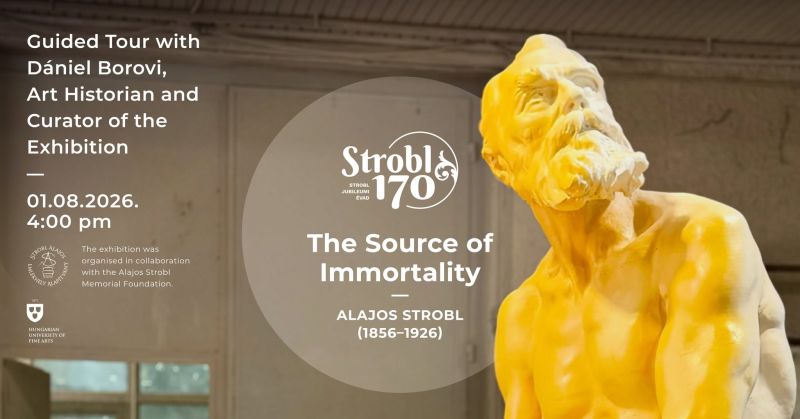
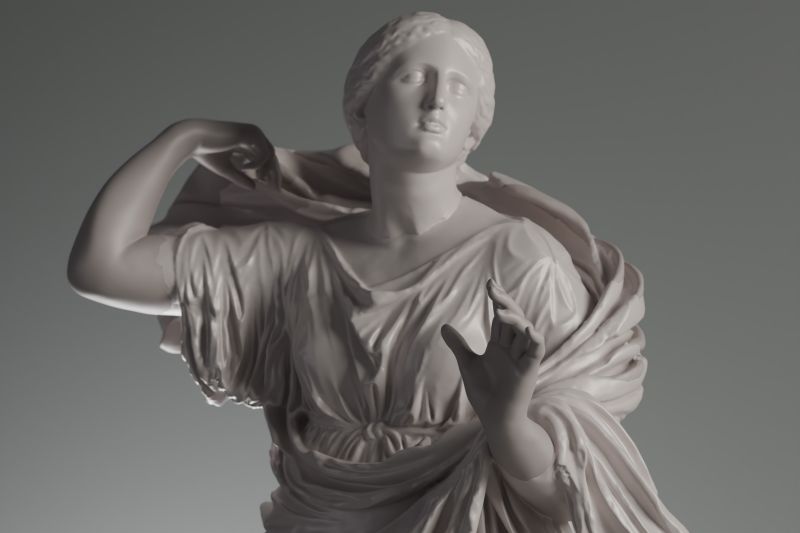
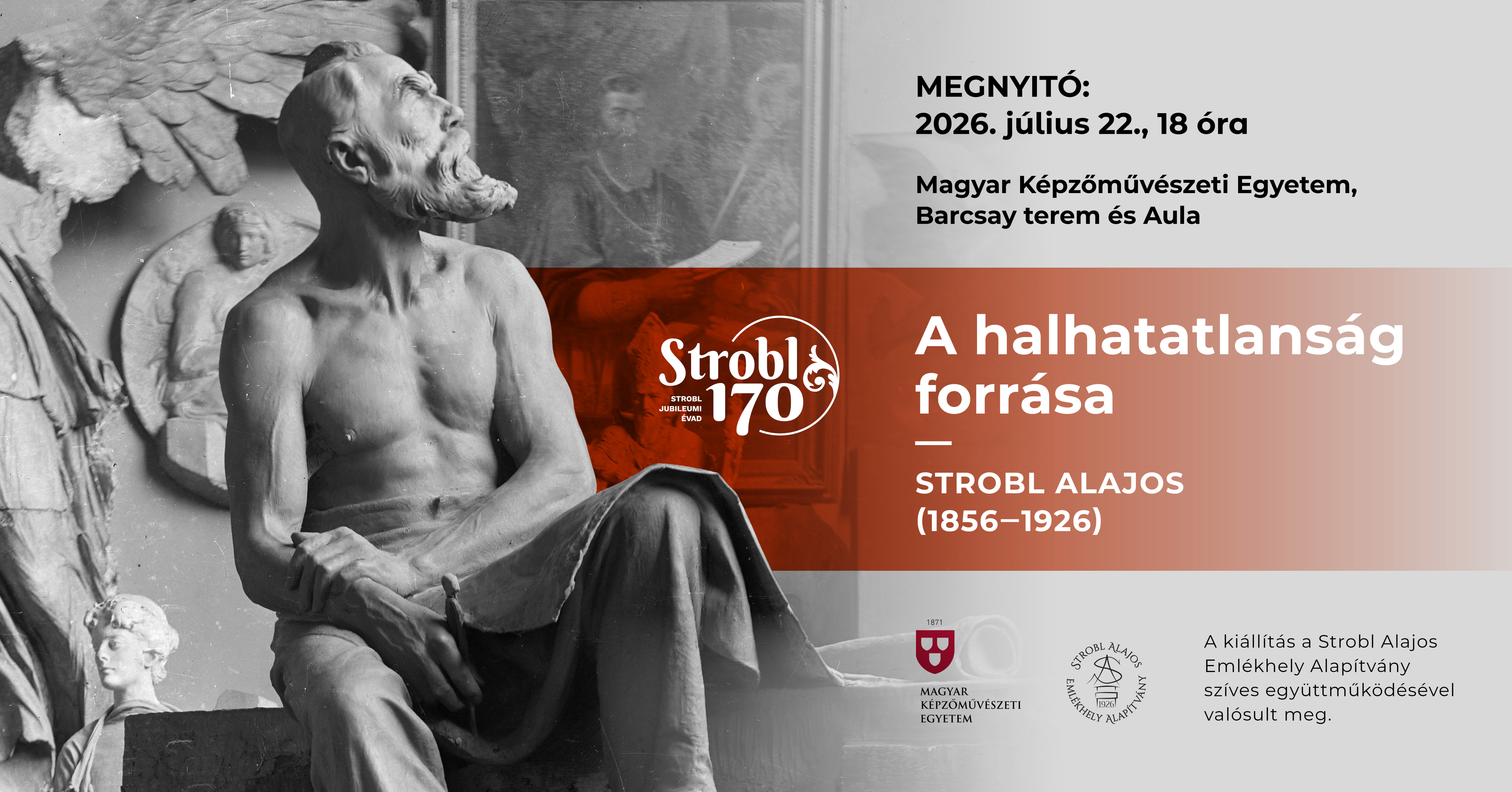
Passers-by on Andrássy Avenue can also admire the statue seated on the building's front steps. Created using state-of-the-art 3D printing technology at almost life size, it is a replica of the figure of Mihály Pospischil from Alajos Strobl's 1913 Mechwart Memorial. The original multi-figure monument was destroyed during the Second World War; only this seated figure survived on its pedestal and is now preserved in the garden of the Foundry Museum.
According to Alajos Strobl's original concept, Mihály Pospischil looked up at the industrial pioneer András Mechwart. Today, a full-scale 3D-printed replica looks up from the MKE staircase towards the artistic legacy of its creator, Alajos Strobl. Through its transience and fragility, this vivid contemporary interpretation draws attention to the permanence of artistic values.
The sculptural installation was realised through a collaboration between the HUFA Department of Sculpture and the Centre for Digital Arts by sculptors Tamás Baráz, Apolka Erős and Dániel Tyurin.
The exhibition was organised in collaboration with the Alajos Strobl Memorial Foundation, which brings together the descendants and admirers of Alajos Strobl.
The exhibition is realized with the support of the National Cultural Fund.