ORSHI DROZDIK: ÖNARCKÉP [SELF-PORTRAIT] 1972–2026
Self-Archiving · Self-Appropriation
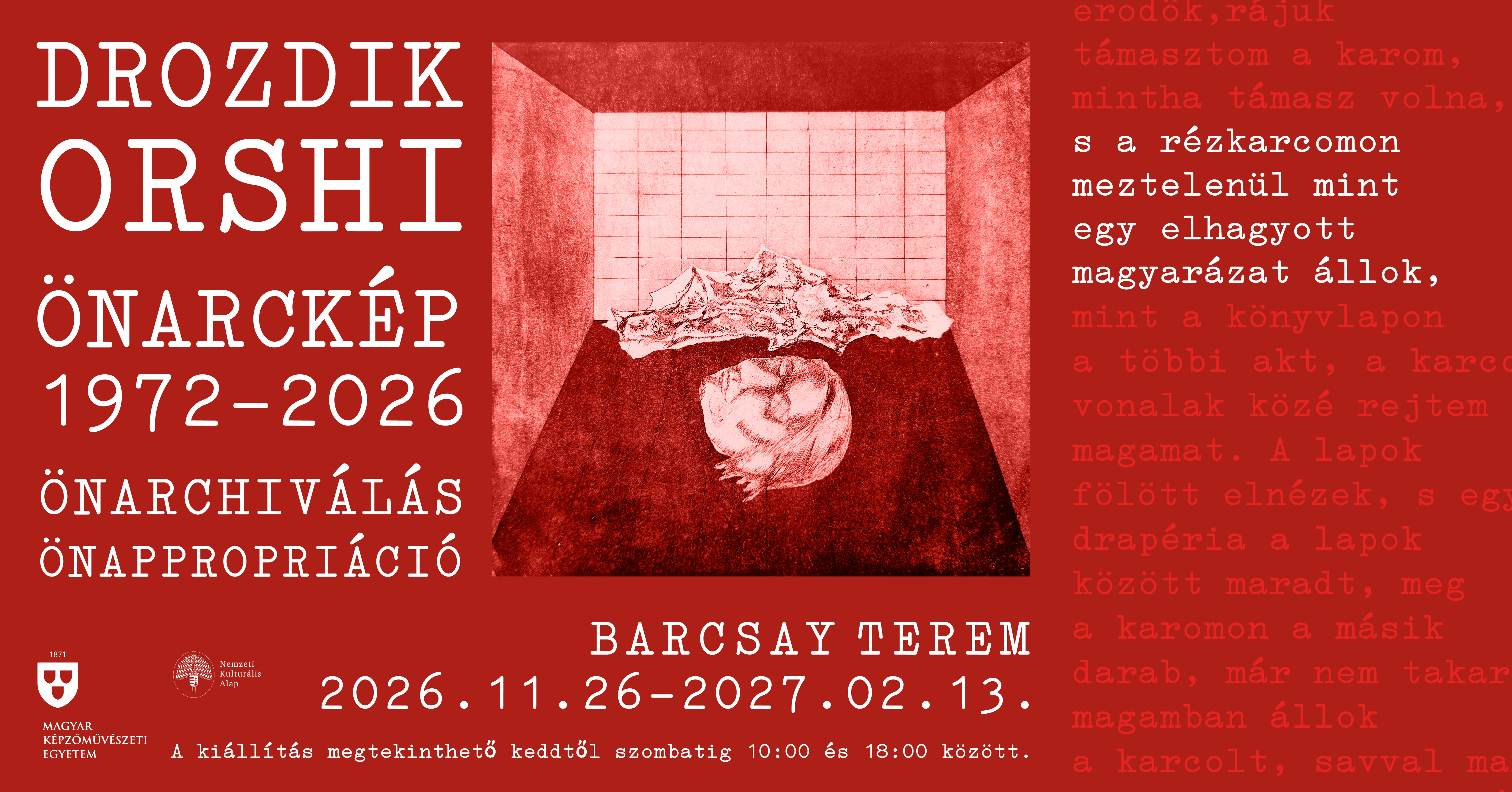
ORSHI DROZDIK: ÖNARCKÉP [SELF-PORTRAIT] 1972–2026
Self-Archiving · Self-Appropriation
Hungarian University of Fine Arts, Barcsay Hall, Budapest
Opening: 26 November 2026, 6:00 p.m.
On view: 26 November 2026 – 13 February 2027, Tuesday–Saturday, 10:00 a.m.–6:00 p.m.
Admission free.
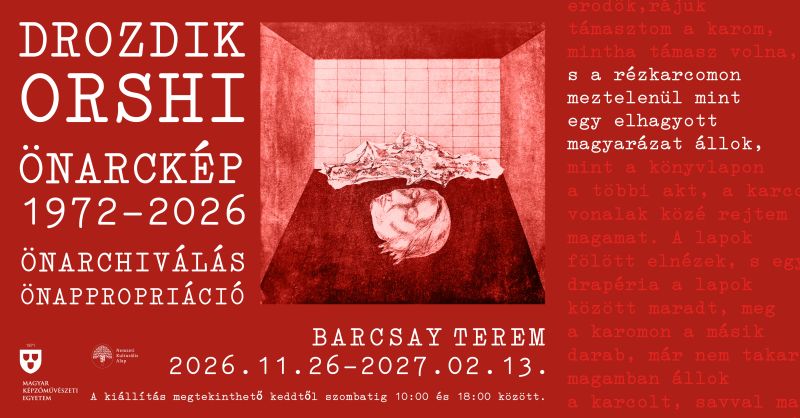
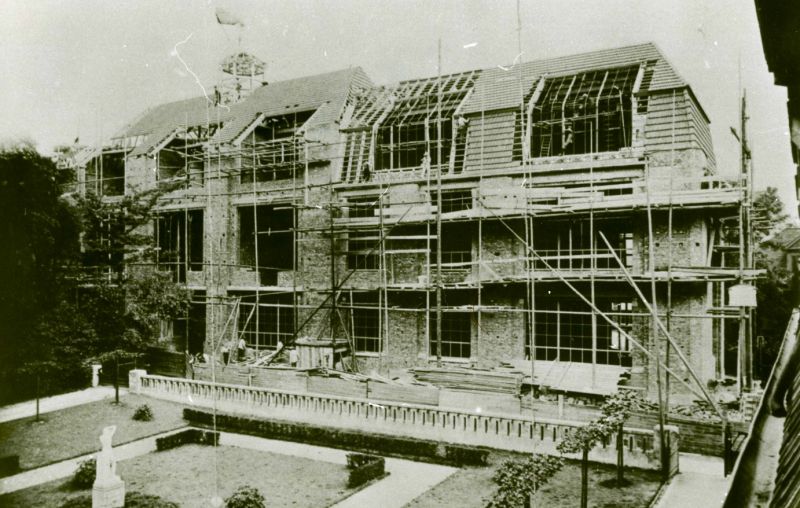
After more than fifty years, Orshi Drozdik’s early etchings and drawings return to where they were made: three Barcsay Hall at the Hungarian University of Fine Arts. Here the artist learned the technique of the acid-bitten line, drew from the nude model, began to question the model’s role and searched for the woman artist’s place and language. Through this return the exhibition makes institutional delay visible and poses the question again where it first emerged: who looks, who draws, who speaks, and who enters the book of art history?
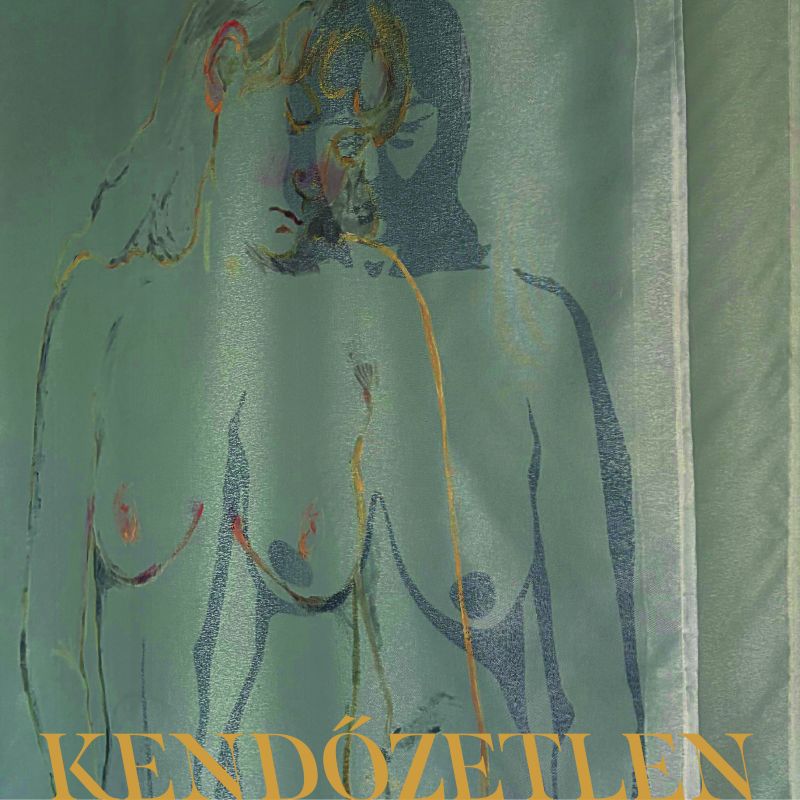
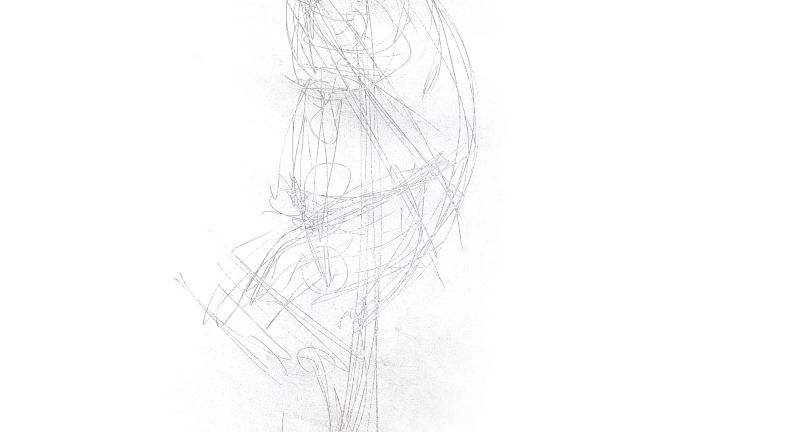
The etchings and drawings of 1972–1975, Rézbe mart elméletek [Theories Bitten into Copper], carry the theoretical core of Drozdik’s feminist, post-conceptual and institution-critical art. In Torso, The Cage, Getting Out of the Book and Me and Myself: Double, the acid-bitten line, pen drawing, the body leaving the book and the doubled self produce critical knowledge: the body is evidence, the book canon, drapery institutional residue, the torso historical diagnosis. The artist turned the canonical medium against its own historical conditions from within.
The Nude Model’s erasures continue this, as does Individual Mythology: Free Dance (I Erase Myself) (1975–1977), in which Drozdik drew herself from photographs of her performances, then erased herself. She made the woman artist’s absence from art history the work through the act of erasure. Her methodological precedent is Hungarian feminism: the work of Margit Kaffka and Valéria Dienes. State socialism proclaimed emancipation achieved, and institutions presented women artists as isolated exceptions; in this interrupted tradition, her own experience provided a constant source of material for critical knowledge.
The first room presents works made in the printmaking department of the Hungarian Academy of Fine Arts in Budapest. For the second and third rooms the artist selected closely related later works: In Someone’s Shadow (1979–1980, Vancouver, Toronto), Diverted Diagonal (1979–1980), I Try to Be Transparent (1980, Toronto), Me and Art History (1979–1982) and Adventure in Technos Dystopium: Fragmenta Naturae (1988–1990, New York).
“For me, self-archiving is more than preservation: it is the unsettling experience of discovering myself anew. As I take up my etchings from 1972 onward, I look back on the path of a young woman artist searching for her own voice in a world in which women’s histories were scarcely inscribed in art history.” (Orshi Drozdik, Budapest, 2026)
The exhibition is accompanied by the artist’s own first-person texts. At a moment when the canon, the archive, female authorship and the place of Eastern European art are being reassessed, Drozdik presents these works as an active contribution to that debate.
Supported by the National Cultural Fund of Hungary (NKA). [to be confirmed]
Orshi Drozdik (b. 1946, Abda, Hungary) studied at the Hungarian Academy of Fine Arts from 1970 to 1977: painting under Szilárd Iván, printmaking under Károly Raszler, then the postgraduate Master School. From 1978 she worked in Amsterdam, Toronto and New York, where she taught at New York University; from 2005 to 2015 she was a professor at the Hungarian University of Fine Arts. Her retrospective Adventure & Appropriation 1975–2001 was held at the Ludwig Museum Budapest in 2002. Her work is in collections including the Hungarian National Gallery, the Ludwig Museum and the Museum of Fine Arts in Budapest, MUMOK in Vienna and the Virginia Museum of Fine Arts. She received the Munkácsy Prize (2003) and the Prima Prize (2023) and is a member of the Széchenyi Academy of Letters and Arts; in 2026 she received the Margit Kaffka Prize and the László Cs. Szabó Prize, and her works won the Art Brussels ’68 Forward Prize.